
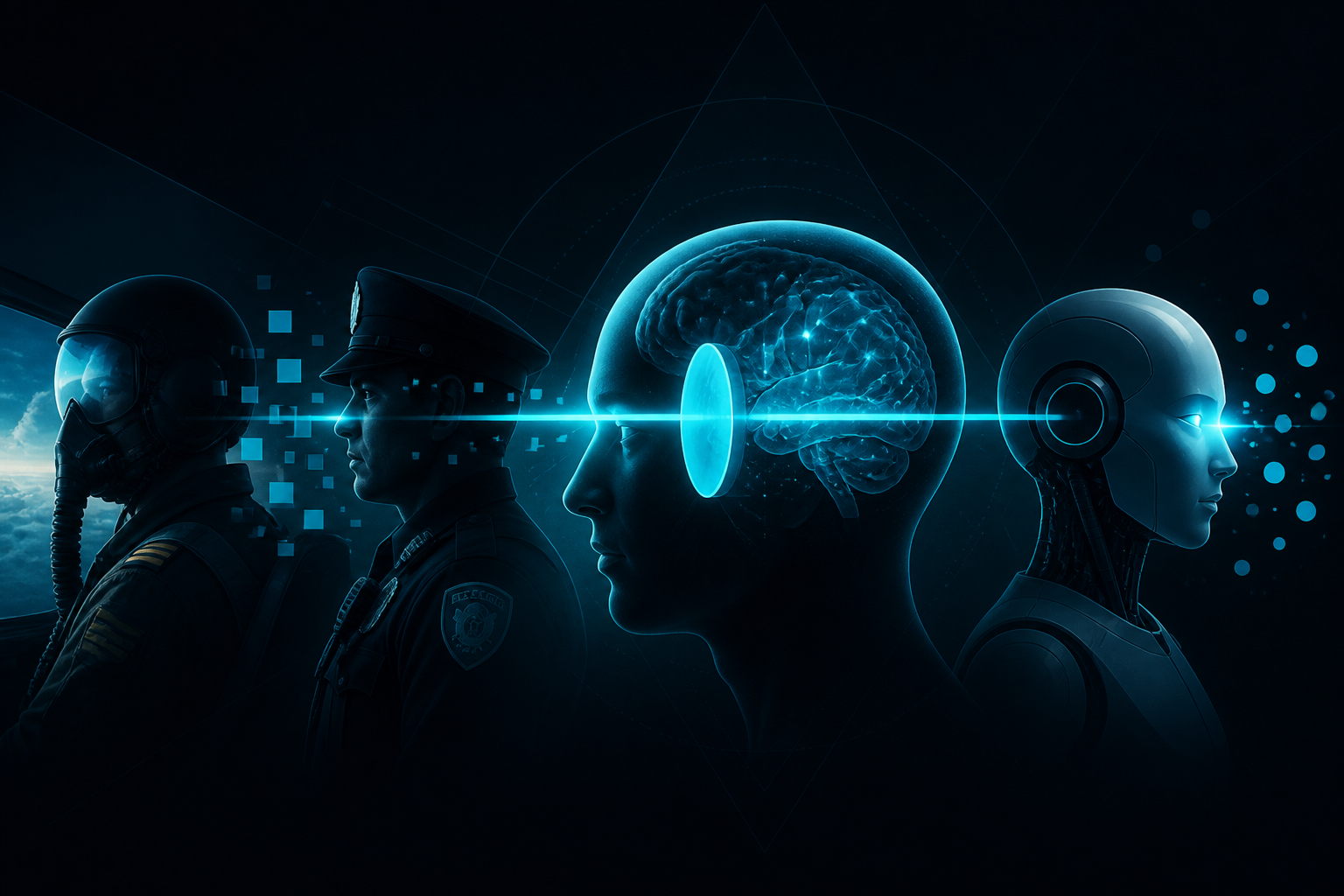
Confirmation Bias: How It Causes Pilot Errors, Police Mistakes, and AI Bots to Get It Wrong
Introduction
Confirmation bias is one of the most dangerous thinking traps I've come across. It happens when we form an early belief and then start noticing, favoring, and remembering information that supports it—while ignoring facts that challenge it.
Encyclopedia Britannica defines confirmation bias as the tendency to process information in ways that align with existing beliefs, often leading people to overlook conflicting evidence.
I want to dig into this because confirmation bias doesn't just cause small misunderstandings, in my view. It can contribute to life-or-death mistakes and high-impact failures:
- In aviation, it can help create pilot error chains.
- In criminal investigations, it can push police toward the wrong suspect.
- In AI, it can cause bots and agents to confidently give the wrong answer by mirroring what they think the user wants.
In this article, I'll explain confirmation bias clearly, walk through how it works in three high-stakes environments, and show how I think we can reduce it—especially when using AI tools and specialized assistants like those I've built into SynaBot.
What Is Confirmation Bias?
The way I see it, confirmation bias is the tendency to:
- Look for evidence that supports what you already believe
- Interpret ambiguous information as support
- Ignore, minimize, or explain away contradictory evidence
This is usually not intentional. That's what makes it so dangerous, in my opinion.
Everyday example
If I believe "this employee is lazy," I might notice:
- missed deadlines
- slower replies
- low energy in meetings
But I might ignore:
- unclear instructions
- unrealistic workload
- broken processes
- missing tools or training
Same situation, different filtering. That filtering is confirmation bias.
Why Confirmation Bias Feels So Convincing
I find that confirmation bias often feels like logic. It feels like:
- "Everything points to this."
- "I knew it."
- "It's obvious."
The problem, as I see it, is that confidence can grow before accuracy grows. When I only collect confirming evidence, my belief becomes stronger even if it's incomplete.
1) Pilot Errors Leading to Disaster
I think aviation is a powerful example because pilots operate under time pressure, fatigue, weather, high workload, and complex systems. Even highly trained professionals can fall into confirmation bias when they form an early explanation and stop testing it.
How confirmation bias starts in the cockpit
A pilot might assume:
- "That warning is just a false alarm."
- "We're lined up with the correct runway."
- "The instrument must be wrong."
- "This is just turbulence."
Once that assumption forms, the brain starts filtering information through it.
Instead of asking: "What else could this mean?"
The mind asks: "What confirms what I already believe?"
Pilot example: "It's just a glitch"
Imagine a night approach in poor visibility with me. A warning tone sounds. One instrument reading looks wrong.
I think: "That instrument has been unreliable before."
Now an anchor is set. Confirmation bias may cause me to notice:
- the plane "feels stable"
- other readings look acceptable
- the landing plan still seems workable
And downplay:
- the warning itself
- instrument cross-check mismatches
- a crew member's hesitation
This, I believe, is how a manageable problem becomes a chain of errors.
Pilot example: expectation + wrong runway cues
In my view, expectation bias and confirmation bias often team up. If a pilot expects a particular runway, the brain can misinterpret visual cues to match that expectation—especially at night, in haze, or in high workload situations.
A pilot may:
- lock onto the wrong lights
- discount instrument guidance
- rationalize alerts
- continue descending to "salvage" the approach
A go-around often breaks this bias chain, in my opinion. It forces a reset.
Aviation lesson
A confident interpretation is not the same as a verified interpretation. That's a distinction I try to hold onto.
2) Police Investigating a Crime
I think confirmation bias can also influence criminal investigations—sometimes with severe consequences.
Investigations often start with messy, incomplete information:
- witness statements
- prior disputes
- motives
- tips
- suspicious behavior
Investigators must form hypotheses. I see that as normal.
The risk, as I understand it, begins when a hypothesis hardens into a conclusion too early.
How it starts
An investigator may think:
- "The ex-partner did it."
- "This looks gang-related."
- "He ran, so he's guilty."
- "She has priors, so she's involved."
Once a narrative forms, evidence can start being filtered to fit it.
The suspect-centered trap
I believe a strong investigation should be evidence-centered.
Confirmation bias can shift it into being suspect-centered, where the investigation subtly becomes: "How do we build the case for the suspect?" instead of "What explanation best matches all evidence?"
This can lead to:
- focusing on incriminating facts
- minimizing contradictory timelines
- ignoring alternative suspects
- treating ambiguity as guilt
- stopping the search too soon
Interview bias and leading questions
If an investigator believes someone is guilty, I've noticed questions can become unintentionally leading:
- "Why were you angry?" instead of "Describe your relationship."
- "When did you go there?" instead of "Where were you?"
- "What happened after the argument?" instead of "Walk me through the evening."
This doesn't just interpret evidence—it can shape evidence, in my opinion.
Justice lesson
If investigators focus on the wrong person, the real offender may remain free. I believe confirmation bias can harm the innocent, delay justice for victims, and damage public trust.
3) AI Agents and AI Bots Giving the Wrong Answer (Because They Think the User Wants It)
Now for the modern version, which is where most of my own work sits.
I've found that AI agents and bots can produce confirmation-style errors by mirroring the user's framing. Many AI systems are optimized to be helpful, relevant, fast, and conversational. That's useful—but it can cause the system to agree too quickly with a biased question.
This matters to me, and I think it matters for anyone building or using AI workflows, especially when browsing tools and prompts from my own resources:
How AI "confirmation" errors happen
A user asks:
- "Why is my employee clearly the problem?"
- "Prove this candidate is a bad fit."
- "Why is this chart definitely bullish?"
- "Why are general bots worse than specialized bots?"
If the AI accepts the assumption, it may generate:
- one-sided arguments
- selectively supportive reasoning
- confident language
- missing alternatives
- weak fact-checking
The result can feel "true" because it sounds polished. I think that's exactly the danger.
AI example: blaming the employee
User: "Why should I fire this underperforming employee immediately?"
A weak AI response might list reasons to terminate. I believe a bias-resistant AI response would ask:
- Were expectations clearly defined?
- Was the employee trained properly?
- Are KPIs objective and documented?
- Is the workflow broken?
- Is management the bottleneck?
When AI fails to ask those questions, it can amplify the user's confirmation bias.
AI example: trading and investing hype prompts
User: "Give me reasons Bitcoin is about to explode this month."
A bias-amplifying AI might produce only bullish points. I think a safer answer would include:
- risks and invalidation
- uncertainty and volatility
- position sizing reminders
- counterarguments and scenarios
AI design lesson
In my view, specialized bots can be better than general bots if they're designed to challenge assumptions and ask clarifying questions instead of simply agreeing.
The Same Pattern in All Three Examples
Pilot: "I know what this warning means." Police: "I know who did it." AI: "I know what answer the user wants."
Then:
- A story forms early
- Attention becomes selective
- Ambiguous evidence gets interpreted to fit
- Confidence rises
- Alternatives vanish
That's confirmation bias, as I understand it.
How to Reduce Confirmation Bias
I use a structured approach. Here's a simple framework I rely on:
The C.H.E.C.K. Method
C — Clarify the claim What exactly am I claiming is true?
H — Hunt for disconfirming evidence What would prove me wrong?
E — Expand alternatives List 2–3 other explanations.
C — Check source quality Is it direct evidence, hearsay, assumption, or AI output?
K — Keep uncertainty visible What's my confidence level (60%, 80%, 95%)?
Conclusion
To me, confirmation bias isn't just a psychology term. It's a real-world risk:
- pilots can misread warnings
- police can lock onto the wrong suspect
- AI bots can reinforce wrong assumptions at scale
The fix, I believe, is consistent:
- slow down
- verify
- test alternatives
- look for what doesn't fit
If you're using AI, my view is that the goal is not "more confidence." The goal is "better thinking."
FAQ's
What is confirmation bias in simple terms?
Confirmation bias is when you favor information that supports what you already believe and ignore evidence that contradicts it.
Why is confirmation bias dangerous?
It can lead to overconfidence, missed warning signs, wrong conclusions, and serious errors in high-stakes decisions.
How does confirmation bias affect pilots?
Pilots can become committed to an early interpretation of warnings or conditions and continue a plan despite evidence they should reconsider.
How does confirmation bias affect police investigations?
Investigators can focus too early on one suspect and interpret evidence around that suspect, increasing the risk of investigative errors.
How does confirmation bias affect AI bots?
AI bots can mirror the user’s framing and provide answers that reinforce assumptions instead of challenging them or requesting missing information.
How can I reduce confirmation bias?
Use structured thinking: clarify the claim, look for disconfirming evidence, consider alternatives, check sources, and keep uncertainty visible.